

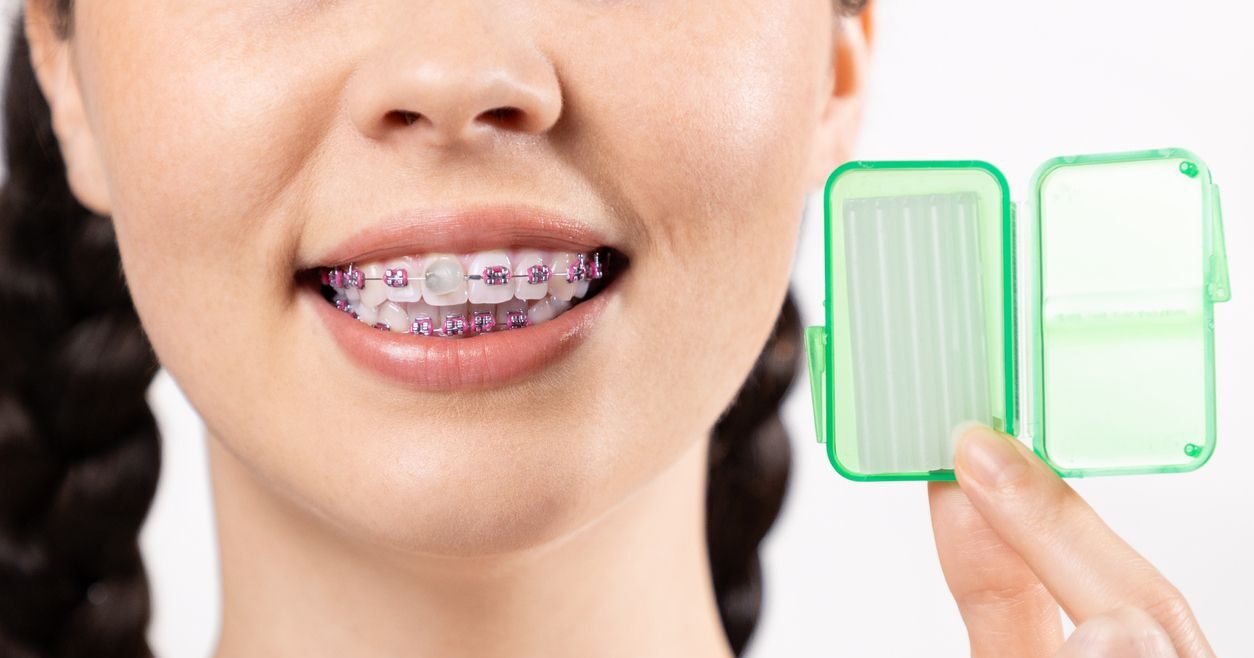
Getting used to braces comes with a few new routines, and orthodontic wax is a handy little helper to keep nearby. If a bracket or wire rubs your cheek or lip while your mouth adjusts, a little wax can make things more comfortable.
At Fritz & Wilson Orthodontics in Holly Springs, we pair expert care with personal attention to help you feel confident and comfortable throughout treatment.
Dr. Kristen Fritz, Dr. Cliff Wilson and our team are breaking down what wax does, how to use it, and when a sore spot needs a little more attention.
Quick Answers
- What is orthodontic wax? Soft, moldable wax that protects your cheeks, lips and tongue from rubbing brackets, wires or appliance edges.
- How do you use it? Clean and dry the irritating area of your appliance, soften a small piece, and gently mold it over the spot.
- Can aligner patients use it? Sometimes! Wax may cushion an irritating outer edge temporarily, but ongoing rubbing or a fit problem needs our attention.
- When do you replace it? Remove wax before meals and brushing, then use a fresh piece if needed. Follow the product directions.
- When should you call us? If an appliance is damaged, an aligner does not fit, or irritation is not improving, our team is here to help, even if wax provides some relief.
What is orthodontic wax, exactly?
Orthodontic wax is a soft material you mold over the part of your appliance that is rubbing. Think of it as a little buffer for your mouth: it smooths over the irritating surface so your cheek or lip does not keep catching on it.
You may see it labeled as dental wax or braces wax. Choose a product specifically labeled for orthodontic relief, and follow the package instructions.
Ingredients in orthodontic wax:
Ingredients vary by brand. Common wax bases include paraffin and microcrystalline wax, while some formulas contain beeswax or carnauba wax. In products made specifically for orthodontic use, these waxes are generally considered non-toxic when used as directed.
Is orthodontic wax edible?
Orthodontic wax is not meant to be eaten, but accidentally swallowing a small piece of standard, nonmedicated wax is usually not a cause for concern.
Follow your product’s directions and check the ingredients if you have known allergies. Household and craft waxes are not substitutes for orthodontic wax.
What does wax for braces help with?
During braces treatment, your mouth may need time to adjust to the brackets and wires. Orthodontic wax for braces can add a little cushioning while you settle into treatment or get used to an adjustment. It can help with:
- Brackets rubbing your cheeks or lips.
- A wire end that feels sharp or pokey.
- An appliance component irritating your tongue.
- A sore spot that needs protection from repeated rubbing.
Wax helps with rubbing, but it does not repair broken braces, treat an infection or relieve the tooth tenderness that can happen as teeth move.
What you’re noticing |
Can wax help? |
What to do |
|---|---|---|
A bracket rubbing your cheek or lip |
Yes—it provides a cushion. | Apply a small piece over the clean, dry bracket. |
A wire end rubbing your mouth |
Temporarily—it can cover the rubbing spot. | Cover it with wax and contact your orthodontic team for guidance. |
An aligner edge rubbing your cheek or lip |
Sometimes—it may add a little cushioning. | Ask your orthodontic team about using wax on the outer edge. |
Teeth feeling tender after an adjustment |
Wax helps with rubbing, rather than tooth tenderness. | Choose softer foods and ask your orthodontic team if you need help managing discomfort. |
How to use orthodontic wax for braces
You do not need to cover every bracket. Start with the spot that is bothering you:
- Wash your hands. Use soap and water before handling wax or touching your appliance.
- Clean the area. Remove old wax and gently brush away food around the bracket or wire.
- Dry the spot. Carefully blot the appliance with clean gauze or a cotton swab. A dry surface helps wax stay in place.
- Soften a small piece. Pinch off enough to cover the spot, usually a small pea-sized amount or less. Roll it between clean fingers until it is moldable.
- Press it onto the appliance. Gently shape the wax over and around the irritating bracket or wire to create a smooth covering. Apply it to the appliance, rather than directly to the sore.
- Replace it as needed. Remove it before meals and brushing. Throw used wax away and apply a fresh piece if the area is still rubbing.
Helping your child? Use a mirror to show them which bracket needs covering. Younger children may need help applying and removing wax; check the product’s age and supervision guidance.
Why does my orthodontic wax keep falling off?
The area may be too wet, the wax may still be too firm, or it may be sitting on top of the bracket instead of being molded around it.
- Dry the spot again, soften a fresh piece and gently shape it around the irritating part.
- Try not to keep poking it with your tongue!
- If you have trouble covering a spot, give us a call. Your Fritz & Wilson team can walk you through it and help you feel more comfortable.
Can you use orthodontic wax for aligners?
Yes, orthodontic wax may provide temporary relief if an aligner edge rubs your cheek or lip. During clear aligner treatment with Spark™, Invisalign® or our in-house aligners, ask our team whether wax is appropriate for the spot that is bothering you.
When using orthodontic wax for clear aligners:
- Seat your aligner fully first.
- Dry the irritating outer edge and gently press a small amount onto that surface.
- Keep wax out of the inside of the tray, where it could interfere with the fit.
- Remove it before taking out and cleaning your aligner.
If your aligner is cracked, warped or not fitting correctly, wax is not the fix. Contact our team so we can help, especially if an edge keeps rubbing or your tray does not seat fully. You can call us at (919) 285-4481.
Avoid trimming or filing it yourself. Wax also will not relieve the pressure of teeth moving.
Where to buy orthodontic wax in Wake County
Wondering, “Where can I find wax for braces?” Start with your orthodontic team! If you have run out or need help choosing a product, let us know. We’re happy to help you find a little relief.
You can also look in the oral-care aisle at pharmacies and major retailers around Holly Springs, Fuquay-Varina and Apex, or order from Amazon!
Keep a case at home and another in your backpack, purse or travel bag. Having wax handy makes it easy to add a little comfort whenever you need it.
Your FAQs About Orthodontic Wax: Answered
Can you eat with orthodontic wax in?
It is best to remove wax before eating. Chewing can loosen it, and wax can collect food particles. After your meal, clean your teeth and braces, then apply a fresh piece if needed. Follow your product’s directions.
Wearing aligners? Take them out before eating, whether you are using wax or not.
Can you sleep with orthodontic wax in?
Yes, standard orthodontic relief wax can generally stay in overnight if your product’s instructions allow it. Brush and floss first, then apply a fresh, small piece securely over the irritating bracket or wire. Remove it for your morning cleaning.
For children, follow the package’s age and supervision guidance. Ask us if you are unsure whether overnight use is appropriate.
What happens if you swallow orthodontic wax?
Accidentally swallowing a small piece of standard, nonmedicated orthodontic wax is generally not a cause for concern. It is not intended to be eaten, though, so avoid swallowing it on purpose and follow the product label.
If you swallow a large amount, have symptoms or are unsure what was swallowed, contact Poison Control at 1-800-222-1222 for guidance. Choking or trouble breathing requires immediate emergency care.
How often should I change my dental wax?
Use a fresh piece after meals and brushing, whenever wax comes loose, or if it becomes dirty. Do not reuse wax you have removed or leave the same piece in place for days.
Can I use wax on clear braces too?
Yes! Orthodontic relief wax can cover a rubbing bracket with metal or clear braces. Apply it the same way: clean, dry, soften and gently mold it over the spot.
Will orthodontic wax heal a mouth sore?
Wax protects the spot from more rubbing, giving irritated tissue a break. It is not medicine or a treatment for the sore itself. A warm saltwater rinse may also feel soothing: dissolve half a teaspoon of salt in eight ounces of warm water, then rinse and spit it out.
If a sore worsens, keeps returning or is not healing, let us know so we can check the cause.
When should I call my orthodontist instead of using more wax?
Call us about a broken bracket, poking wire, damaged aligner or irritation that continues despite wax.
Do not wait for your next scheduled visit if something is broken or causing ongoing discomfort. Our guide to orthodontic emergencies explains what to do while you arrange care.
Severe pain, swelling, fever or signs of infection need prompt professional attention. Trouble breathing or swallowing, or heavy uncontrolled bleeding, requires emergency care.
A little wax, a more comfortable smile journey
A small piece of orthodontic wax can make a big difference when a bracket or appliance edge is rubbing. Keep it handy, replace it regularly, and remember that your Fritz & Wilson team is here whenever you need help.
Whether you’re navigating your child’s first week with braces or an irritating aligner edge of your own, reach out to Fritz & Wilson Orthodontics in Holly Springs.
We’re here to help our Wake County families feel comfortable and confident every step of the way.