

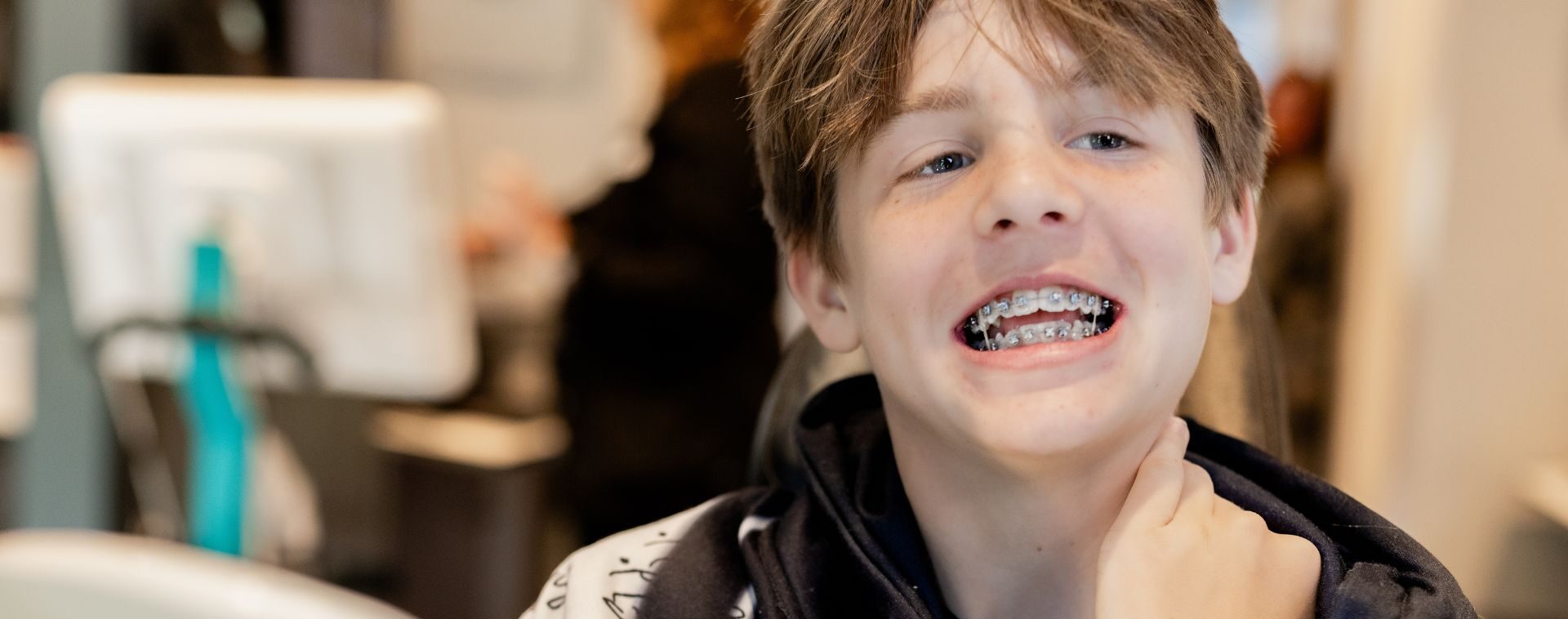
If you’ve recently been told you need to wear rubber bands with your braces, you probably have a few questions:
- Can I eat with rubber bands on my braces?
- What do rubber bands actually do?
- How long will I have to wear them?
- Do I really need to wear them all day?
- What happens if I forget to wear them?
You’re not alone! Rubber bands (also called orthodontic elastics) are one of the most common parts of braces treatment, but they can take some getting used to.
At Fritz and Wilson Orthodontics, we want every patient to feel confident about their treatment plan. Understanding why you’re wearing elastics and how they help your smile can make staying on track much easier.
Can You Eat with Rubber Bands on Braces?
In most cases, you should remove your rubber bands before eating.
Eating with elastics can cause them to:
- Stretch out
- Break
- Lose their effectiveness
- Trap food around your braces
After you finish eating, brush your teeth if possible and replace your elastics with a fresh set.
Every treatment plan is different, so always follow the instructions provided by your orthodontist.
What Do Rubber Bands Do on Braces?
Rubber bands help correct the relationship between your upper and lower teeth.
While your braces or clear aligners are working to move individual teeth into better positions, elastics provide additional force to help improve your bite alignment.
Orthodontic elastics are commonly used to correct:
- Overbites
- Underbites
- Crossbites
- Open bites
- Other bite alignment concerns
Think of braces or clear aligners as helping straighten your teeth, while elastics help your upper and lower jaws work together more effectively.
Your orthodontist creates a specific elastic pattern based on your unique smile, so your rubber bands may not look the same as someone else’s.
Why Did My Orthodontist Give Me Rubber Bands?
Many patients wonder if getting rubber bands means something is wrong.
Actually, the opposite is often true!
Rubber bands are usually added because your treatment has reached an important stage where correcting your bite is the next step.
Your orthodontist is carefully guiding your teeth and jaws toward a healthier, more balanced bite.
At Fritz and Wilson Orthodontics, every treatment plan is customized based on your individual smile goals, which means your elastic instructions are designed specifically for you.
What Do Braces Rubber Bands Look Like?
Orthodontic elastics are small, stretchy bands that attach to special hooks on your braces.
They come in different:
- Sizes
- Strengths
- Configurations
Depending on your bite, your elastics may connect your upper teeth to your lower teeth in different patterns.
Our orthodontic team will show you exactly where your rubber bands should go and how to replace them.
Your Daily Rubber Band Routine
Wearing elastics consistently is the key to helping them work properly.
Here’s a simple routine to follow:
Morning
- Remove elastics before eating breakfast
- Brush your teeth
- Put in a fresh set of elastics
During the Day
- Keep extra rubber bands with you
- Replace broken elastics right away
- Follow your orthodontist’s wear instructions
Night
- Put in fresh elastics before bed
- Wear them while sleeping
Small habits make a big difference!
How Long Do You Have to Wear Rubber Bands for Braces?
The answer depends on your individual treatment plan.
Some patients wear elastics for a few months, while others may need them longer. Dr. Fritz and Dr. Wilson will monitor your progress and let you know when it’s time to adjust or stop wearing them.
Factors that can affect how long you wear rubber bands include:
- The type of bite correction needed
- How your teeth respond to treatment
- Your age
- How consistently you wear your elastics
The biggest factor you can control is consistency.
Patients who wear their elastics exactly as directed usually stay on track better than patients who frequently forget them.
How Many Hours a Day Should You Wear Rubber Bands?
Many patients are instructed to wear elastics most of the day and night, removing them only for meals, brushing, and cleaning their teeth.
Your orthodontist will give you specific instructions based on your treatment needs.
Remember: rubber bands only work when they’re being worn.
Can You Drink with Rubber Bands on Braces?
Plain water is fine while wearing elastics.
For drinks like:
- Soda
- Sports drinks
- Juice
- Sweetened coffee
it’s best to follow your orthodontist’s recommendations. Removing elastics when needed and maintaining good oral hygiene can help protect your teeth throughout treatment.
What Happens If You Forget to Wear Your Rubber Bands?
Forgetting once happens, but making it a habit can slow your progress.
Not wearing your elastics as directed may:
- Delay bite correction
- Extend your treatment timeline
- Require additional adjustments
Rubber bands work by providing gentle, consistent pressure. When they aren’t worn regularly, your teeth and bite may not move as efficiently.
If you forget, simply put in a fresh set when you remember. Do not double up on elastics unless your orthodontist specifically tells you to.
Can You Wear Extra Rubber Bands to Finish Faster?
No.
Wearing extra elastics or doubling up will not make your treatment move faster.
Too much force can actually create unwanted tooth movement and make your orthodontic treatment more complicated.
The fastest way to finish treatment is to wear the correct elastics exactly as prescribed.
Do Rubber Bands Hurt?
It’s normal to feel some soreness when you first start wearing elastics.
That feeling usually means your teeth and jaws are adjusting to the new pressure.
Most patients notice the discomfort improves after a few days.
A few tips that can help:
- Wear your elastics consistently
- Replace stretched-out bands
- Follow your orthodontist’s instructions
- Avoid taking them in and out unnecessarily
How Often Should You Change Rubber Bands?
Most patients should replace their elastics regularly, especially after meals or whenever they are removed.
Fresh elastics provide the consistent force needed to keep treatment moving efficiently.
Always use the elastics provided by your orthodontic team because different sizes and strengths are designed for different purposes.
Rubber Band Troubleshooting Guide
- “My rubber band broke. What should I do?”
Orthodontist Answer: “Replace it with a fresh elastic as soon as possible.”
- “I forgot my rubber bands. What now?”
Orthodontist Answer: “Put them back in when you remember. Don’t wear extra bands to make up for missed time.”
- “My elastics are making my teeth sore.“
Orthodontist Answer: “Some soreness is normal when starting. If you have significant discomfort, contact us”
- “I ran out of rubber bands.”
Orthodontist Answer: “Call or text us for more. It’s always a good idea to keep extras nearby.”
Tips for Wearing Rubber Bands Successfully
A few simple tricks can make elastics easier:
- Keep extra elastics in your backpack, purse, car, or locker
- Store them near your toothbrush so they become part of your routine
- Set phone reminders when you’re getting started
- Replace broken bands right away
- Keep a few extras with you at all times
Your future smile will thank you!
Your Rubber Bands Are Small, But They Have a Big Job
Those tiny elastics may not seem like they’re doing much, but they play an important role in creating a healthier, more balanced smile.
Every time you wear your rubber bands as directed, you’re helping your orthodontic treatment stay on track.
Braces and elastics work together to create the smile you’ve been working toward.
Still Have Questions About Rubber Bands and Braces?
Your orthodontic team is here to help!
At Fritz and Wilson Orthodontics, we want every patient to understand their treatment and feel confident throughout their smile journey.
If you have questions about your braces, elastics, or treatment progress, don’t hesitate to ask. We’re always happy to help you take the next step toward your future smile.